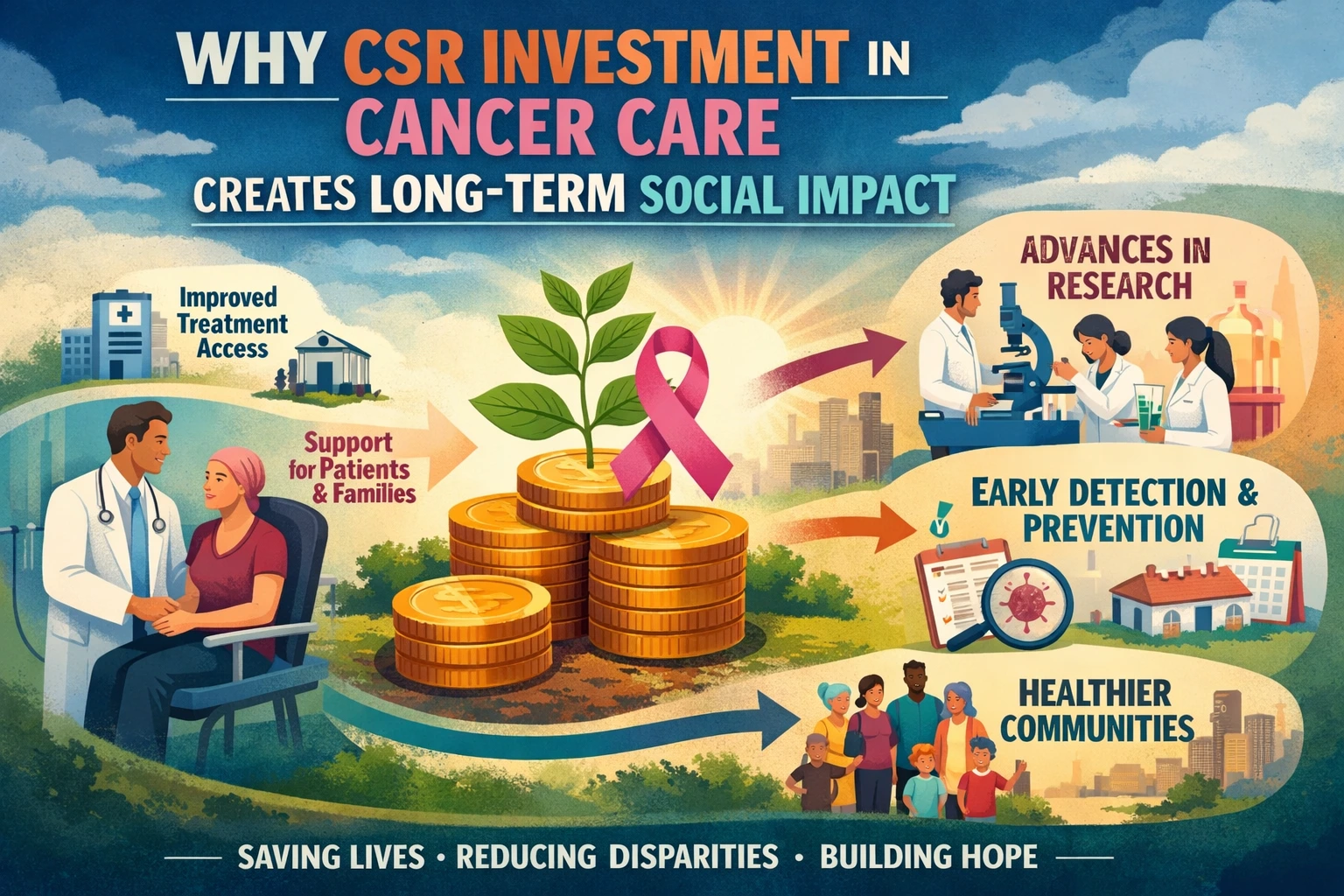
Cancer has quietly become one of India’s most pressing public health challenges. While advances in medical science have improved treatment outcomes, access to timely cancer care remains unequal especially for rural, low-income, and underserved communities. For thousands of families every year, a cancer diagnosis is not just a medical emergency, but a financial and emotional crisis.
This is where nonprofit cancer hospitals and NGOs like Saidham Cancer Hospital play a life-saving role. Through a combination of donations, CSR partnerships, and community-driven healthcare models, Saidham Cancer Hospital ensures that cancer care is accessible, ethical, and affordable for those who need it the most.
The Real Cost of Cancer in India
Cancer treatment in India can cost anywhere between ₹2 lakh to ₹15 lakh or more, depending on the stage and type of cancer. For families surviving on daily wages or marginal incomes, this cost is devastating. As a result:
- Many patients delay diagnosis
- Cancer is detected at advanced stages
- Treatment is discontinued midway
- Mortality rates increase unnecessarily
Despite government schemes, gaps in awareness, infrastructure, and last-mile access continue to exist—especially in rural India.
Why Cancer Care Must Be a CSR Priority
Under Schedule VII of the Companies Act, healthcare is a key CSR focus area. Among all healthcare interventions, cancer care delivers one of the highest social returns on investment.
CSR investment in cancer care helps:
- Address a growing national health burden
- Create measurable, reportable outcomes
- Improve ESG and SDG alignment
- Strengthen community trust and goodwill
By supporting cancer care, corporates move beyond compliance and contribute to long-term nation-building.
Saidham Cancer Hospital: A Governance-Led Cancer Care NGO
Saidham Cancer Hospital is a nonprofit cancer care institution committed to the belief that no patient should be denied treatment due to lack of money. The hospital follows a structured, transparent, and outcome-oriented approach to cancer care.
Core Focus Areas:
- Preventive cancer awareness
- Early cancer detection and screening
- Free and subsidized cancer treatment
- Long-term patient follow-up and support
This integrated model ensures that patients are supported at every stage—from awareness to recovery.
How Donations Create Direct, Measurable Impact
Donations form the backbone of Saidham Cancer Hospital’s ability to respond quickly and save lives. Unlike institutional funding cycles, donations allow immediate intervention.
Donation Support Is Used For
- Free cancer screening camps
- Diagnostic tests for early-stage patients
- Life-saving cancer surgeries
- Chemotherapy and treatment subsidies
- Patient nutrition, counseling, and follow-up care
Every contribution small or large helps reduce treatment delays and improves survival outcomes.
The Power of Individual Donors in Cancer Care
While CSR partnerships are essential, individual donors play a critical role in urgent and flexible funding. Many life-saving interventions cannot wait for approvals or annual budgets.
Individual donations help:
- Fund emergency diagnostics
- Support patients awaiting surgery
- Prevent treatment dropouts
- Fill gaps not covered by schemes
Collectively, individual donors ensure that time-sensitive cancer care remains uninterrupted.
CSR Partnerships That Go Beyond Funding
Saidham Cancer Hospital believes that CSR partnerships should be collaborations, not transactions. Corporates partnering with the hospital become long-term stakeholders in community health outcomes.
What CSR Partners Receive
- Clearly defined project scope
- Measurable health impact metrics
- Transparent fund utilization reports
- Alignment with ESG and SDG goals
- Positive brand visibility and goodwill
CSR funds are deployed through structured programs that deliver scalable and auditable outcomes.
End-to-End Cancer Care Model Supported by CSR
CSR support enables Saidham Cancer Hospital to run a full-cycle cancer care model, including:
- Community awareness and education
- Early detection through screening camps
- Diagnosis and clinical evaluation
- Treatment, surgery, and therapy
- Follow-up care and survivorship support
This holistic approach ensures that cancer care is not fragmented, but patient-centered and sustainable.
Transparency and Accountability for Donors and CSR Partners
Trust is the foundation of effective philanthropy. Saidham Cancer Hospital maintains strict standards of governance and accountability.
Donors and CSR partners benefit from:
- Ethical medical practices
- Clear documentation of outcomes
- Regular impact updates
- Responsible financial management
This transparency builds confidence and encourages long-term engagement.
Why Supporting Cancer Care Creates a Lasting Legacy
Supporting cancer care is not just about treating a disease it is about:
- Protecting families from financial ruin
- Preserving livelihoods
- Empowering communities through awareness
- Strengthening India’s healthcare ecosystem
Whether through CSR funding or individual donations, your support helps create a future where cancer is detected early, treated ethically, and survived with dignity.
Join the Mission of Saidham Cancer Hospital
Saidham Cancer Hospital invites:
- Corporates seeking meaningful CSR partnerships/li>
- Foundations looking for high-impact healthcare programs/li>
- Individuals who want their donations to save lives/li>
Together, we can ensure that financial hardship never decides who gets cancer treatment and who doesn’t.