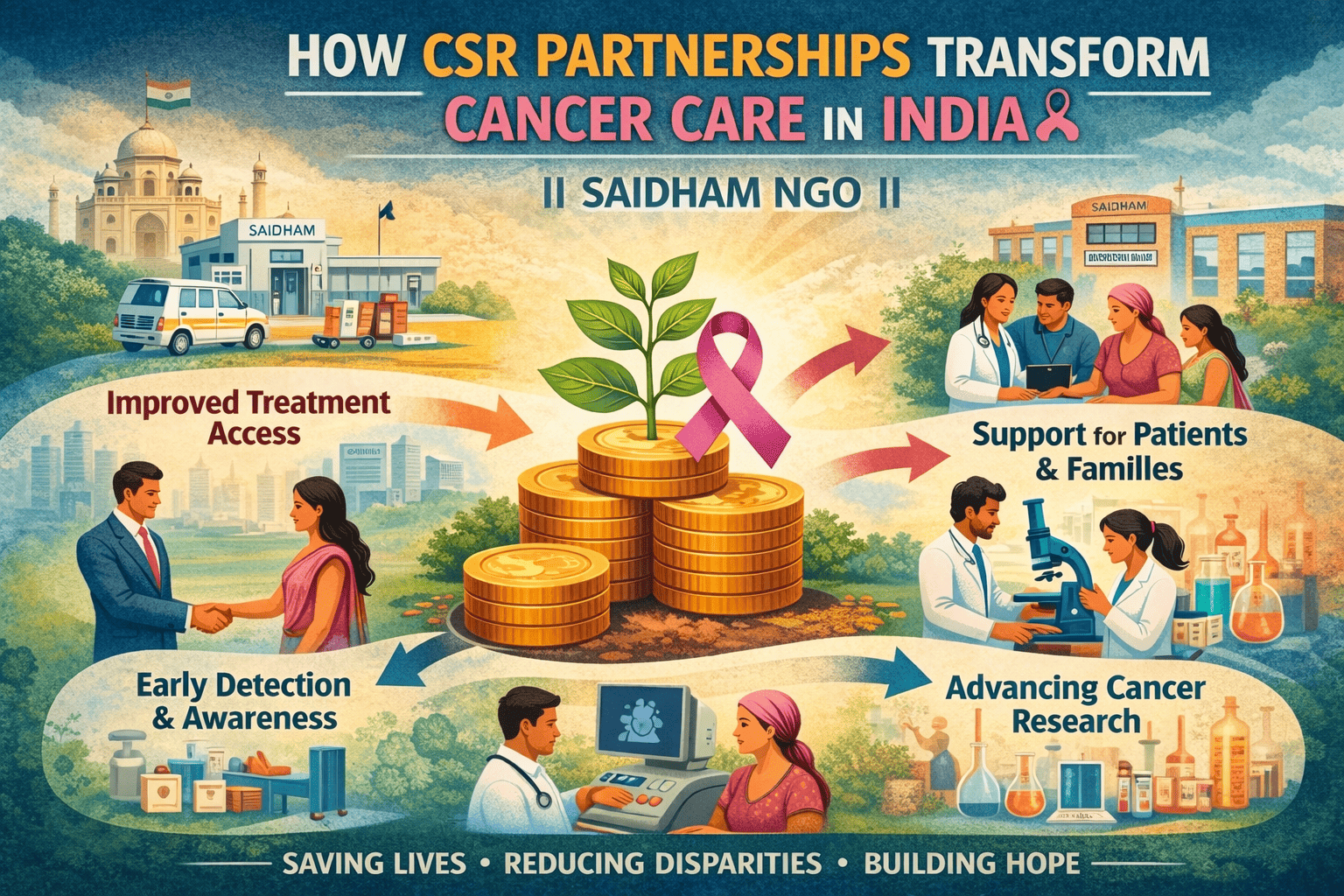
Cancer has emerged as one of the most complex healthcare challenges facing India today. While medical technology and clinical expertise have advanced significantly, access to timely and affordable cancer care remains deeply unequal. Rural communities, low-income families, and underserved populations continue to face late diagnoses, treatment delays, and preventable mortality.
In this context, Corporate Social Responsibility (CSR) partnerships in healthcare have become a powerful mechanism to bridge critical gaps in cancer prevention, detection, and treatment. NGOs like Saidham Cancer Hospital demonstrate how structured CSR collaborations can create sustainable, scalable, and measurable cancer care solutions across India.
The Growing Need for CSR in Cancer Care
India reports a steady rise in cancer cases every year, with a significant percentage detected at advanced stages. The reasons are well documented:
- Lack of awareness about early symptoms
- Limited access to screening facilities
- High cost of diagnostics and treatment
- Inadequate oncology infrastructure in rural areas
While government healthcare schemes play an important role, they cannot address the full scale and urgency of the cancer burden alone. This is where CSR-funded healthcare interventions become essential.
Why Cancer Care Is a High-Impact CSR Focus Area
Under Schedule VII of the Companies Act, healthcare is a key CSR domain. Among healthcare initiatives, cancer care stands out due to its:
- High social and economic impact
- Clear outcome measurability
- Strong alignment with ESG and SDG goals
- Direct relevance to employee and community well-being
CSR investment in cancer care delivers tangible outcomes such as early diagnosis, reduced mortality, and lower financial burden on families—making it one of the most meaningful CSR interventions available.
Saidham Cancer Hospital: An Ideal CSR Implementation Partner
Saidham Cancer Hospital is a nonprofit cancer care institution committed to ethical, patient-centric healthcare delivery. The hospital operates with a governance-led model that ensures transparency, accountability, and measurable impact—key requirements for CSR partnerships.
Core Areas Supported Through CSR:- Preventive cancer awareness programs
- Community-based cancer screening camps
- Early diagnosis and referral services
- Free and subsidized cancer treatment and surgeries
- Long-term patient follow-up and survivorship care
This end-to-end approach ensures CSR funds are utilized efficiently and responsibly.
How CSR Partnerships Create Sustainable Cancer Care Modelsc
Unlike one-time donations, CSR partnerships enable NGOs to plan, scale, and sustain healthcare programs over longer periods. At Saidham Cancer Hospital, CSR funding supports structured programs that focus on both immediate and long-term outcomes.
Key Benefits of CSR-Supported Cancer Programs
- Early detection reduces treatment complexity and cost
- Preventive care lowers long-term disease burden
- Consistent funding ensures uninterrupted patient care
- Community trust increases healthcare participation
These outcomes contribute to building resilient healthcare ecosystems, rather than short-term relief.
Measurable Outcomes and Impact Reporting
One of the biggest strengths of CSR-led cancer care initiatives is the ability to measure impact clearly. Saidham Cancer Hospital follows robust monitoring and evaluation frameworks to track outcomes such as:
- Number of individuals screened
- Early-stage cancer detection rates
- Surgeries and treatments supported
- Reduction in treatment dropouts
- Geographic and demographic reach
CSR partners receive structured reports that support statutory compliance, ESG disclosures, and internal impact assessments.
CSR, ESG, and SDG Alignment
Cancer care initiatives naturally align with global and national sustainability frameworks. CSR partnerships with Saidham Cancer Hospital contribute directly to:
- SDG 3: Good Health and Well-Being
- SDG 10: Reduced Inequalities
- SDG 17: Partnerships for the Goals
From an ESG perspective, healthcare-focused CSR enhances a company’s social performance, community engagement, and long-term stakeholder trust.
Beyond Funding: Building Long-Term Value Through CSR
Effective CSR partnerships go beyond financial contributions. Corporates collaborating with Saidham Cancer Hospital often engage in:
- Employee volunteering and awareness programs
- Health camps for employees and local communities
- Knowledge-sharing and capacity building
- Long-term program co-creation
Such engagement strengthens brand credibility and fosters a culture of social responsibility within the organization.
Transparency and Governance in CSR Implementation
For CSR leaders, trust and compliance are non-negotiable. Saidham Cancer Hospital maintains strict governance standards, including:
- Ethical medical practices
- Clear fund utilization mechanisms
- Regular audits and documentation
- Outcome-based program evaluation
This governance framework ensures that CSR investments are both impactful and defensible from a compliance standpoint.
Why CSR Investment in Cancer Care Is a Long-Term Legacy
Supporting cancer care through CSR is not just a statutory obligation—it is a strategic decision that creates lasting social value. It helps:
- Save lives through early intervention
- Protect families from catastrophic healthcare costs
- Strengthen India’s public health infrastructure
- Build healthier, more productive communities
CSR partners become part of a long-term mission to make cancer care accessible and dignified for all.
Partner With Saidham Cancer Hospital for Meaningful CSR Impact
Saidham Cancer Hospital welcomes partnerships with corporates, foundations, and institutions seeking high-impact healthcare CSR initiatives.
By partnering together, we can ensure that timely cancer care reaches those who need it most—and that no life is lost due to lack of access or affordability.